The Spiritual Versus the Natural

14 The natural person does not accept the things of the Spirit of God, for they are folly to him, and he is not able to understand them because they are spiritually discerned. 15 The spiritual person judges all things, but is himself to be judged by no one. 16 “For who has understood the mind of the Lord so as to instruct him?” But we have the mind of Christ. 1 Corinthians 2:13-16 ESV

The wisdom of God is foolishness to men. The idea that a divine being sent His Son to live as a man and die on a cross to pay for the sins of humanity is ludicrous to them. It is a delusional fable at best or a diabolical lie at worst. But Paul would argue that the problem lies not with the message or with the intent of the messenger; it is that those to whom the message is shared are incapable of receiving it. They are spiritually unable to comprehend it. It would be like an American trying to understand a message spoken to him in a foreign language. The message and the messenger could both be accurate, but the meaning would be lost because the one to whom the message is being given doesn’t speak the language.

The message of the cross is heavenly in nature; it is a spiritually based message that requires interpretation by the Spirit of God. Natural man, as Paul describes him, cannot understand the words and wisdom of God. Paul refers to him as “natural” simply to say that he is not spiritual or of the spirit. Anyone who has not placed their faith in Christ is a natural man or woman; they lack the presence of the indwelling Spirit of God. And as Paul writes, “people who aren’t spiritual can’t receive these truths from God’s Spirit. It all sounds foolish to them and they can’t understand it, for only those who are spiritual can understand what the Spirit means” (1 Corinthians 2:14 NLT). The Spirit of God makes the wisdom and mind of God discernible to human beings. Without His assistance, we would be unable to comprehend the mysterious ways of God.

But it was to us that God revealed these things by his Spirit. For his Spirit searches out everything and shows us God’s deep secrets. No one can know a person’s thoughts except that person’s own spirit, and no one can know God’s thoughts except God’s own Spirit. – 1 Corinthians 2:10-11 ESV

It is impossible for natural man, under the control of his own sinful nature, to discern God’s mind. Even those who placed their faith in Christ as their Savior had to have help from God’s Spirit just to believe. Their eyes had to be opened and their hearts regenerated by the Spirit to comprehend the life-changing nature of the gospel message.

“The natural person can, of course, understand the gospel and experience salvation but only because the Holy Spirit illuminates his or her understanding.” – Robert A. Pyne, “The Role of the Holy Spirit in Conversion,” Bibliotheca Sacra 150:598 (April-June 1993):204-5).

The moment the Spirit opens the eyes of the natural person so that they can see and accept the wonderful message of God’s gracious gift of salvation through Christ, He comes to dwell within them. They go from being natural to spiritual. The word Paul uses is πνευματικός (pneumatikos) and it means “one who is filled with and governed by the Spirit of God” (“G4152 – pneumatikos – Strong’s Greek Lexicon (KJV).” Blue Letter Bible).

Because of the Spirit’s presence within them, Christ-followers have the capacity to understand the things of the Spirit, or, as Paul refers to them, spiritual truths. It is not the wisdom or eloquence of men that makes the things of God accessible and understandable; it is the Spirit of God. Human wisdom cannot make spiritual truths discernible to men; it requires the Holy Spirit. Even Paul admits, “When we tell you these things, we do not use words that come from human wisdom. Instead, we speak words given to us by the Spirit, using the Spirit’s words to explain spiritual truths” (1 Corinthians 2:13 NLT).

Even if a spiritual person attempts to speak spiritual truth without the Spirit’s help, they will end up relying upon human wisdom, and their message will fall on deaf ears. It will lack power because it will be devoid of truth. It may be eloquent, impressive, and even well-received, but it will not communicate the wisdom of God or contain the power of God.

One of the primary benefits of having the Spirit of God within us is the ability He provides to discern and evaluate all things. We have been given the Word of God and the Spirit of God so that we might understand the will of God. Jesus told His disciples, “When the Spirit of truth comes, he will guide you into all truth” (John 16:13 NLT). With the Spirit’s help, we can accurately evaluate and determine God’s will for any given circumstance. The Spirit guides and directs, comforts and consoles, and provides strength when needed and patience when waiting is necessary.

We have a supernatural source of wisdom that allows us to know the mind of God. In fact, Paul states, “we have the mind of Christ” (1 Corinthians 2:16b ESV). With the Spirit’s help, we have access to divine knowledge. We can see life through the eyes of Christ and live as He did. In other words, we have the divine capacity to live Christ-like lives even in our fallen state. We have the capacity to live holy, righteous lives even though we still have our old sin natures and exist in a sin-filled world.

The world will not understand us because natural men and women are incapable of discerning our ways. They will misunderstand and misjudge us. Our lives will make them uncomfortable. Our desire for and pursuit of holiness will leave them confused. Our attempt to live set-apart lives will make them feel judged, and so they will judge us in return. Since they are natural and not spiritual, they will never be able to understand what motivates us. Our love for the Word of God will make no sense to them. Our trust in the will of God will seem naive to them. Our hope in our future salvation by God will come across as little more than wishful thinking to them. But we have the Spirit of God and the mind of Christ, so the inexplicable has become understandable. The indiscernible has become comprehensible and believable. So we believe, wait, and live with hope because the Spirit of God has made the promises of God real and reliable.

Father, thank You for providing Your Spirit so that we can discern Your will and Your ways. Without Him, we would remain hopelessly blind to the reality of salvation made possible through the death and resurrection of Your Son. Your Spirit opened our eyes to see and accept the truth of salvation by grace alone through faith alone in Christ alone. We didn’t earn it and we could not have comprehended it without the Spirit’s assistance. And now, we live in this world with the help of the Spirit’s presence and power. As Peter wrote, Your “divine power has given us everything we need for life and godliness through the knowledge of Him who called us by His own glory and excellence” (2 Peter 1:3 BSB). And we are grateful.
Amen

English Standard Version (ESV) The Holy Bible, English Standard Version. ESV® Permanent Text Edition® (2016). Copyright © 2001 by Crossway Bibles, a publishing ministry of Good News Publishers.

New Living Translation (NLT) Holy Bible, New Living Translation, copyright © 1996, 2004, 2015 by Tyndale House Foundation. Used by permission of Tyndale House Publishers Inc., Carol Stream, Illinois 60188. All rights reserved.

The Call to Holiness

1 Finally, then, brothers, we ask and urge you in the Lord Jesus, that as you received from us how you ought to walk and to please God, just as you are doing, that you do so more and more. For you know what instructions we gave you through the Lord Jesus. For this is the will of God, your sanctification: that you abstain from sexual immorality; that each one of you know how to control his own body in holiness and honor, not in the passion of lust like the Gentiles who do not know God; that no one transgress and wrong his brother in this matter, because the Lord is an avenger in all these things, as we told you beforehand and solemnly warned you. For God has not called us for impurity, but in holiness. Therefore whoever disregards this, disregards not man but God, who gives his Holy Spirit to you. 1 Thessalonians 4:1-8 ESV

Paul’s overwhelming desire to see the Thessalonian believers face-to-face was about more than a chance to reconnect and get reacquainted with old friends. Paul had something far more important in mind. As he told them in the previous section of his letter, the motivation behind his desire to see them again was that he “might supply what is lacking in your faith” (1 Thessalonians 3:10 ESV). The reason he had sent Timothy to Thessalonica was “to establish and exhort” them in their faith (1 Thessalonians 3:2 ESV). 

And while Paul has confessed that Timothy’s good news regarding their faith and love brought him comfort, he still felt the pressing need to see them so that he might “fill in the gaps” of their faith (1 Thessalonians 3:10 NLT).

Paul’s deep love for these people seems quite obvious. He had a pastor’s heart that cared for their spiritual well-being. While their faith was strong, even in the midst of trying circumstances, Paul knew that there was much they needed to know if they were going to remain strong in the days ahead. The battle was far from over because the enemy had not thrown in the towel. The opposition had not given up its efforts to demoralize the sheep and discredit the shepherd.

So, Paul felt compelled to share with them one final word of counsel. He complimented them on their faith and love and described them as “standing fast in the Lord” (1 Thessalonians 3:8 ESV). But there is one more thing they needed to hear him say.

we ask and urge you in the Lord Jesus, that as you received from us how you ought to walk and to please God. – 1 Thessalonians 4:1 ESV

Paul was not admonishing them or demanding that they correct their sinful behavior. In fact, he added the statement, “…just as you are doing” (1 Thessalonians 4:1 ESV). They were already living in a way that pleased God, but Paul wants them to know that they were going to need to do so “more and more” (1 Thessalonians 4:1 ESV).

In the short time Paul and Silas had spent in Thessalonica, they had instructed them how to live their lives in a way that was pleasing to God. To get his point across, Paul used the Greek word peripateo, which is translated as “walk.” It was one of Paul’s favorite terms that could be used to refer to the physical act of walking, but he used it as a metaphor for spiritual life. When he used the term “walk,” he was referring to the daily conduct of one’s life. In those days, walking was the primary mode of transportation for the average person. You couldn’t conduct your life without walking. So, Paul used this normal, everyday means of mobility as an analogy for living the Christian life, and he used it often.

who walk (peripateo) not according to the flesh but according to the Spirit… – Romans 8:4 ESV

Let us walk (peripateo) properly as in the daytime, not in orgies and drunkenness, not in sexual immorality and sensuality, not in quarreling and jealousy. – Romans 13:13 ESV

Only let each person lead the life (peripateo) that the Lord has assigned to him, and to which God has called him. – 1 Corinthians 7:17 ESV

I therefore, a prisoner for the Lord, urge you to walk (peripateo) in a manner worthy of the calling to which you have been called – Ephesians 4:1 ESV

walk (peripateo) in a manner worthy of the Lord, fully pleasing to him.  – Colossians 1:10 ESV

As followers of Christ, their spiritual walk or manner of life was to be distinctively different than that of their lost friends and family members. They were to live set-apart lives, marked by holiness and righteousness. But their spirituality was never meant to remain in a static state. Salvation was never intended to be a one-time event but was to be an ongoing, regularly occurring, and lifelong transformational process. The apostle Peter referred to it as growing up in salvation (1 Peter 2:2).  Paul told the Ephesians believers to “grow up in every way into him [Christ]” (Ephesians 4:15 ESV).

There is no place for complacency in the Christian life. At no point are we to become satisfied with the status quo. We are not the ones who get to determine whether we have successively achieved spiritual maturity, and Paul makes that point perfectly clear to his brothers and sisters in Thessalonica.

For this is the will of God, your sanctification – 1 Thessalonians 4:3 ESV

Paul put it in blunt terms. What God wanted of them and for them was simple: Their sanctification. But what did he mean by this? The Greek word he used is hagiasmos, and it can be translated as “holiness.” It derives from another Greek word, hagiazo, which means “to separate from profane things and dedicate to God.” To be holy is to be set apart or consecrated for a specific purpose. In the case of a believer, they are set apart to God. So, to be sanctified is the process of being constantly and consistently set apart for God’s use. It involves a separation from all that is ungodly or unrighteous. Or as Paul liked to put it, it involves putting off the old and putting on the new.

 …put off your old self, which belongs to your former manner of life and is corrupt through deceitful desires…put on the new self, created after the likeness of God in true righteousness and holiness. – Ephesians 4:22, 24 ESV

Just a few verses earlier in his letter to the Ephesian believers, Paul challenged them, “You must no longer walk as the Gentiles do…” (Ephesians 4:17 ESV). They were not to conduct their lives in the same way they had before. In fact, in chapter two of Ephesians, Paul points out the stark difference between their new life in Christ and that of their old, pre-salvation nature.

…you were dead in the trespasses and sins in which you once walked (peripateo), following the course of this world, following the prince of the power of the air, the spirit that is now at work in the sons of disobedience— among whom we all once lived in the passions of our flesh, carrying out the desires of the body and the mind, and were by nature children of wrath, like the rest of mankind. – Ephesians 2:2-3 ESV

But Paul stressed the change that had taken place in their lives.

But God, being rich in mercy, because of the great love with which he loved us, even when we were dead in our trespasses, made us alive together with Christ—by grace you have been saved… – Ephesians 2:4-5 ESV

The lives of the Ephesians believers had been radically changed when they placed their faith in Christ. The same thing was true of the believers in Thessalonica, and that change was to be tangible and visible. It was to show up in their behavior and every facet of their daily lives. Just to make sure they understood the non-negotiable and all-pervasive nature of this change, Paul provided them with the details.

God’s will is for you to be holy, so stay away from all sexual sin. Then each of you will control his own body and live in holiness and honor—not in lustful passion like the pagans who do not know God and his ways. – 1 Thessalonians 4:3-5 NLT

There was to be no compromising of their faith. Their new life in Christ left no room for old habits and attitudes. Paul told the Corinthian believers, “Anyone who belongs to Christ has become a new person. The old life is gone; a new life has begun!” (2 Corinthians 5:17 NLT).

The old adage, “something old, something new,” has no place in the life of the believer. God expects and demands life transformation and has provided His Holy Spirit to make it possible. A life marked by sexual sin and immorality was unacceptable for the Christ-follower; it violated the will of God and failed to model a life of holiness. In the Greek culture of that day, sexual promiscuity was an accepted way of life. Demosthenes, a Greek statesman and orator, wrote, “We keep prostitutes for pleasure; we keep mistresses for the day-to-day needs of the body; we keep wives for the begetting of children and for the faithful guardianship of our homes.”

In a culture marked by self-indulgence and the willful gratification of all sexual desires, the Christian was to live in a way that distinguished them as having been set apart or consecrated to God — separated from the profane and dedicated to His glory. To do so demands self-control. They would need to control their physical passions and desires, choosing instead to “live in holiness and honor—not in lustful passion like the pagans who do not know God and his ways” (1 Thessalonians 4:4-5 ESV).

Once again, Paul puts his thoughts in simple, easy-to-understand terms: “God has called us to live holy lives, not impure lives” (1 Thessalonians 4:7 NLT). Not a lot of wiggle room there. Paul doesn’t leave it open for negotiation or debate. God’s will was their sanctification. His expectation was holiness, not impurity. He was interested in set-apartness, not sameness. Anyone who rejected this idea was not rejecting the teachings of Paul; they were disobeying and, ultimately, denying the will of God Almighty.

Therefore whoever disregards this, disregards not man but God, who gives his Holy Spirit to you. – 1 Thessalonians 4:8 ESV

Paul was teaching the need to live an ongoing life of transformation. The Thessalonian believers were to walk and please God more and more. There was to be no end to their spiritual journey. At no point were they to assume they had arrived. Salvation was to result in ongoing sanctification, a never-ending, Spirit-empowered conformity to the image of Christ — for a lifetime. No, for eternity.

Father, the call to holiness sounds so unachievable. We still live in a fallen world and do battle with our sinful natures every day. I get it that You want us to live holy lives and I understand that Your Spirit provides us with all the power we need for life and godliness (2 Peter 1:3). But it still seems so impossible. Even Jesus said, “The spirit is willing, but the body is weak!” (Matthew 26:41 NLT). And the apostle Paul admitted his own struggle with sin when he wrote, “I want to do what is right, but I can’t. I want to do what is good, but I don’t. I don’t want to do what is wrong, but I do it anyway” (Romans 7:18-19 NLT). But I know You would not call us to live holy lives if You didn’t have a way to make it possible. I have seen you transform my life through the power of the Spirit and the application of Your Word. I am not the man I once was and I know I am not yet the man You intend me to be. I am a work in process, and, one day, You will finish what You began by fully transforming me into the likeness of Your Son. In the meantime, help me to stay strong, to remain committed, and to recognize my inability to change myself. My sanctification is Your job, not mine. You are the one who saved me and You alone can sanctify me. But I have to cooperate and make Your will my own. Amen.

English Standard Version (ESV) The Holy Bible, English Standard Version. ESV® Permanent Text Edition® (2016). Copyright © 2001 by Crossway Bibles, a publishing ministry of Good News Publishers.

New Living Translation (NLT) Holy Bible, New Living Translation, copyright © 1996, 2004, 2015 by Tyndale House Foundation. Used by permission of Tyndale House Publishers Inc., Carol Stream, Illinois 60188. All rights reserved.

The Danger of Divided Allegiance

10 At the end of twenty years, in which Solomon had built the two houses, the house of the LORD and the king’s house, 11 and Hiram king of Tyre had supplied Solomon with cedar and cypress timber and gold, as much as he desired, King Solomon gave to Hiram twenty cities in the land of Galilee. 12 But when Hiram came from Tyre to see the cities that Solomon had given him, they did not please him. 13 Therefore he said, “What kind of cities are these that you have given me, my brother?” So they are called the land of Cabul to this day. 14 Hiram had sent to the king 120 talents of gold.

15 And this is the account of the forced labor that King Solomon drafted to build the house of the LORD and his own house and the Millo and the wall of Jerusalem and Hazor and Megiddo and Gezer 16 (Pharaoh king of Egypt had gone up and captured Gezer and burned it with fire, and had killed the Canaanites who lived in the city, and had given it as dowry to his daughter, Solomon’s wife; 17 so Solomon rebuilt Gezer) and Lower Beth-horon 18 and Baalath and Tamar in the wilderness, in the land of Judah, 19 and all the store cities that Solomon had, and the cities for his chariots, and the cities for his horsemen, and whatever Solomon desired to build in Jerusalem, in Lebanon, and in all the land of his dominion. 20 All the people who were left of the Amorites, the Hittites, the Perizzites, the Hivites, and the Jebusites, who were not of the people of Israel— 21 their descendants who were left after them in the land, whom the people of Israel were unable to devote to destruction—these Solomon drafted to be slaves, and so they are to this day. 22 But of the people of Israel Solomon made no slaves. They were the soldiers, they were his officials, his commanders, his captains, his chariot commanders and his horsemen.

23 These were the chief officers who were over Solomon’s work: 550 who had charge of the people who carried on the work.

24 But Pharaoh’s daughter went up from the city of David to her own house that Solomon had built for her. Then he built the Millo.

25 Three times a year Solomon used to offer up burnt offerings and peace offerings on the altar that he built to the LORD, making offerings with it before the LORD. So he finished the house.

26 King Solomon built a fleet of ships at Ezion-geber, which is near Eloth on the shore of the Red Sea, in the land of Edom. 27 And Hiram sent with the fleet his servants, seamen who were familiar with the sea, together with the servants of Solomon. 28 And they went to Ophir and brought from there gold, 420 talents, and they brought it to King Solomon. 1 Kings 9:10-28 ESV

Solomon doesn’t realize it, but he is at the midway point of his 40-year reign. He has just completed the construction of the Temple, his royal palaces, and all the buildings that will house his administrative offices.

With these projects behind him, Solomon turns his attention to other pressing matters. First, he makes an attempt to compensate King Hiram of Phoenicia for all the material and financial aid he provided over the years. Early in his reign, Solomon made an agreement with Hiram that provided all the lumber he needed for his many construction projects, while Hiram received much-needed grain and olive oil in return.

So Hiram supplied as much cedar and cypress timber as Solomon desired. In return, Solomon sent him an annual payment of 100,000 bushels of wheat for his household and 110,000 gallons of pure olive oil. – 1 Kings 5:10-11 NLT

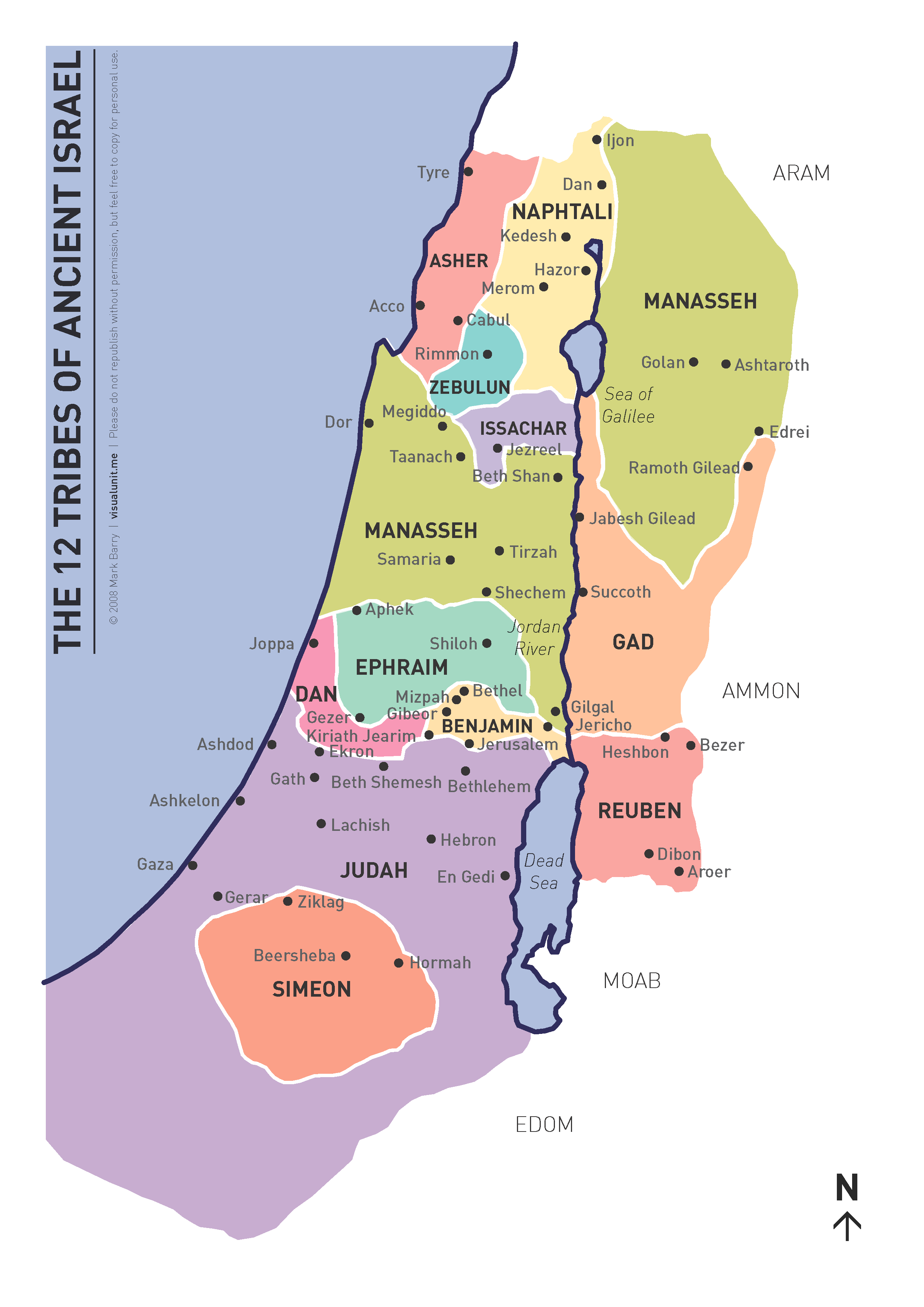
This agreement had lasted for 20 years, and during that time, Solomon compensated King Hiram for all the lumber and paid wages to all the Phoenician wood-workers who helped with the various construction projects (1 Kings 5:6). But now that all the work was done, Solomon wanted to make a gesture of goodwill to his friend in Phoenicia. So, he gave Hiram 20 cities located in the land of Galilee along the border between Israel and Phoenicia. This appears to be a gracious act of generosity on Solomon’s part, but it quickly becomes apparent that his gift was a bit disingenuous. When Hiram personally inspected the cities Solomon had given him, his response reveals his deep disappointment.

“What kind of towns are these, my brother?” he asked. So Hiram called that area Cabul (which means “worthless”), as it is still known today. – 1 Kings 9:13 NLT

Evidently, these towns were located in a region of Galilee that was not conducive to agricultural production. Since Phoenicia occupied a narrow strip of land along the Mediterranean Sea, they were woefully deficient in arable farmland. That’s why Solomon’s compensation for the lumber had taken the form of grain and olive oil. At first glance, it would appear that Solomon had given them what they had always needed: Land on which to grow crops. But Hiram described Solomon’s gift as “Cabul,” a word that means “bound” or “sterile.” And while these 20 towns expanded the range of Hiram’s kingdom, they were essentially worthless. They provided no practical value. What makes Solomon’s gift that much more egregious is that, over the years, Hiram had given Solomon 120 talents of gold. To put that in perspective, that’s nearly 5 tons of gold.

One could almost draw the conclusion that Solomon was somewhat of a Scrooge, a financial tightwad who was more than willing to spend money on himself but was somewhat stingy when it came to others. It is also interesting to note that Solomon had given away land that had been part of the inheritance given by God to the people of Israel.

It’s most likely that the 20 towns were located in territory that belonged to the tribes of Asher, Naphtali, and Zebulun. In awarding these cities to Hiram, Solomon was guilty of giving away land that belonged to the people of God. His willingness to turn over possession of the land, coupled with Hiram’s poor assessment of it, reveals that it held no real value to Solomon.

One of the things that can be learned from studying the history of the Israelites is that every decision they made had long-term ramifications. The Book of Judges reveals that, at one point, the tribes of Asher, Naphtali, and Zebulun were told to conquer and occupy the land allotted to them by God, but they failed.

The tribe of Zebulun failed to drive out the residents of Kitron and Nahalol, so the Canaanites continued to live among them. But the Canaanites were forced to work as slaves for the people of Zebulun.

The tribe of Asher failed to drive out the residents of Acco, Sidon, Ahlab, Aczib, Helbah, Aphik, and Rehob. Instead, the people of Asher moved in among the Canaanites, who controlled the land, for they failed to drive them out.

Likewise, the tribe of Naphtali failed to drive out the residents of Beth-shemesh and Beth-anath. Instead, they moved in among the Canaanites, who controlled the land. Nevertheless, the people of Beth-shemesh and Beth-anath were forced to work as slaves for the people of Naphtali. – Judges 1:30-33 NLT

One of the reasons the Phoenicians even existed was because of the failure of these three tribes to do what God had commanded them to do. As a result of their inability to drive out the inhabitants of the land, the Phoenicians occupied territory that was supposed to belong to the people of God. Now, Solomon had just awarded the Phoenicians with even more of Israel’s God-given inheritance.

Solomon’s primary focus was the city of Jerusalem. Having willingly forfeited the towns located in the north, Solomon poured his time and energy into expanding his royal capital. To do so, Solomon enslaved thousands of non-Jews to work as laborers on his various rebuilding and enlargement projects. He conscripted Amorites, Hittites, Perizzites, Hivites, and Jebusites who were living in the land of Israel to provide slave labor for his ambitious expansion program. These people were used to extend the walls of Jerusalem, connecting the Old City of David with the newer area surrounding the Temple complex, the royal palaces, and administrative headquarters. They “built towns as supply centers and constructed towns where his chariots and horses could be stationed” (1 Kings 9:19 NLT). Solomon was constructing a virtual theme park dedicated to his greatness, complete with palaces, terraces, stables for his numerous horses, and barracks for his expanding army. 

And it’s essential to recall that God had warned the people of Israel that their kings were not to rule like the kings of other nations.

The king must not build up a large stable of horses for himself… – Deuteronomy 17:16 NLT

The king must not take many wives for himself… – Deuteronomy 17:17 NLT

And he must not accumulate large amounts of wealth in silver and gold for himself… – Deuteronomy 17:17 NLT

Solomon violated each of these commands. And while at this point, it appears that the daughter of Pharaoh was his only wife, it wouldn’t be long before he expanded his household greatly.

Now King Solomon loved many foreign women. Besides Pharaoh’s daughter, he married women from Moab, Ammon, Edom, Sidon, and from among the Hittites. The LORD had clearly instructed the people of Israel, “You must not marry them, because they will turn your hearts to their gods.” Yet Solomon insisted on loving them anyway. He had 700 wives of royal birth and 300 concubines. And in fact, they did turn his heart away from the LORD. – 1 Kings 11:1-3 NLT

Whether it was wives and concubines or horses and chariots, Solomon always seemed to be in expansion mode. Enough was never enough. He even built a fleet of boats and initiated an aggressive trading venture that yielded 16 tons of gold. For Solomon, bigger was always better. Yet, late in his life, he would make a sad but telling admission.

I increased my possessions:
I built houses for myself;
I planted vineyards for myself.
I designed royal gardens and parks for myself,
and I planted all kinds of fruit trees in them.
I constructed pools of water for myself,
to irrigate my grove of flourishing trees.
I purchased male and female slaves,
and I owned slaves who were born in my house;
I also possessed more livestock—both herds and flocks—
than any of my predecessors in Jerusalem.
I also amassed silver and gold for myself,
as well as valuable treasures taken from kingdoms and provinces.
I acquired male singers and female singers for myself,
and what gives a man sensual delight—a harem of beautiful concubines.
So I was far wealthier than all my predecessors in Jerusalem,
yet I maintained my objectivity.
I did not restrain myself from getting whatever I wanted;
I did not deny myself anything that would bring me pleasure.
So all my accomplishments gave me joy;
this was my reward for all my effort.
Yet when I reflected on everything I had accomplished
and on all the effort that I had expended to accomplish it,
I concluded: “All these achievements and possessions are ultimately profitless—
like chasing the wind!
There is nothing gained from them on earth.” – Ecclesiastes 1:4-11 NLT

They say, “hindsight is 20-20,” and that maxim would prove to be true in Solomon’s life. He would one day discover that his obsession with constant expansion, endless pleasure, and rampant materialism would never satisfy. But at the midway point of his reign, he didn’t know any better. So, he continued to strive to balance his affection for the things of this world with his devotion to God.  He continued to accumulate material goods while simultaneously offering sacrifices to God. Without even realizing it, he was worshiping two gods. Solomon was living out the very thing Jesus would later warn His disciples about.

“No one can serve two masters. For you will hate one and love the other; you will be devoted to one and despise the other. You cannot serve God and be enslaved to money.” – Matthew 6:24 NLT

There was a reason Yahweh forbade His kings from accumulating wealth, wives, and material possessions. They were to place their hope and trust in Him alone. Marital alliances with foreign nations were off-limits for Israel’s kings because of the risk of idolatry. Yahweh knew that these pagan women would bring their foreign gods with them, providing a dangerous influence on Israel’s kings. He also prohibited the kings of Israel from establishing fighting forces that used military tactics borrowed from foreign powers. Horses and chariots were off limits because they would give the Israelites a false sense of superiority based on something other than Yahweh. King David had warned about the danger of misplaced hope.

Some nations boast of their chariots and horses,
    but we boast in the name of the LORD our God. – Psalm 20:7 NLT

Solomon’s kingdom was growing along with his reputation, and it would seem that his ego was expanding at an equally rapid rate. His unbridled power and influence led him to make decisions that would have unexpected consequences. His enslavement of the former inhabitants of the land and his forced conscription of Israelite citizens would come back to haunt him (1 Kings 12:1-4). But for now, Solomon was living the dream, unaware that his decisions would have long-term ramifications.

English Standard Version (ESV) The Holy Bible, English Standard Version. ESV® Permanent Text Edition® (2016). Copyright © 2001 by Crossway Bibles, a publishing ministry of Good News Publishers.

New Living Translation (NLT) Holy Bible, New Living Translation, copyright © 1996, 2004, 2015 by Tyndale House Foundation. Used by permission of Tyndale House Publishers Inc., Carol Stream, Illinois 60188. All rights reserved.

Obedience Is Non-Optional

1 As soon as Solomon had finished building the house of the LORD and the king’s house and all that Solomon desired to build, the LORD appeared to Solomon a second time, as he had appeared to him at Gibeon. And the LORD said to him, “I have heard your prayer and your plea, which you have made before me. I have consecrated this house that you have built, by putting my name there forever. My eyes and my heart will be there for all time. And as for you, if you will walk before me, as David your father walked, with integrity of heart and uprightness, doing according to all that I have commanded you, and keeping my statutes and my rules, then I will establish your royal throne over Israel forever, as I promised David your father, saying, ‘You shall not lack a man on the throne of Israel.’ But if you turn aside from following me, you or your children, and do not keep my commandments and my statutes that I have set before you, but go and serve other gods and worship them, then I will cut off Israel from the land that I have given them, and the house that I have consecrated for my name I will cast out of my sight, and Israel will become a proverb and a byword among all peoples. And this house will become a heap of ruins. Everyone passing by it will be astonished and will hiss, and they will say, ‘Why has the LORD done thus to this land and to this house?’ Then they will say, ‘Because they abandoned the LORD their God who brought their fathers out of the land of Egypt and laid hold on other gods and worshiped them and served them. Therefore the LORD has brought all this disaster on them.’” 1 Kings 9:1-9 ESV

Twenty years into what would prove to be a 40-year reign, Solomon received a second vision from God. Having completed all the major building programs he had initiated, including the Temple, Solomon was ready to focus his attention elsewhere. So, God revealed Himself to Solomon in a dream, just as He had done at Gibeon 20 years earlier.

At Gibeon the LORD appeared to Solomon in a dream by night – 1 Kings 3:5 ESV

In this second divinely inspired dream, Solomon heard God reaffirm His commitment to honor the Temple by bestowing His presence upon it. In doing so, God would set the Temple apart and make it holy.

“I have heard your prayer and your petition. I have set this Temple apart to be holy—this place you have built where my name will be honored forever. I will always watch over it, for it is dear to my heart. – 1 Kings 9:3 NLT

At the dedication of the Temple, when the fire descended from heaven and consumed the sacrifices, God demonstrated His acceptance of both the offering and the Temple. This was followed by the cloud of His presence taking up residence in the Holy of Holies. These actions signified that the building Solomon had constructed had been consecrated to God and was now deemed for His use alone. The Temple, its grounds, and all the furniture and utensils contained within it belonged exclusively to God. He affirmed His approval of the Temple and His willingness to grace it with His presence, power, and protection. But Yahwehn also expected His people to treat the Temple with a requisite degree of reverence and awe.

Next, God turned His attention to Solomon. It was not enough to have a Temple dedicated to the service and worship of God; Yahweh also expected His king to live a life that was totally set apart and consecrated to Him. So, He gave Solomon a sobering reminder of His expectations.

“As for you, if you will follow me with integrity and godliness, as David your father did, obeying all my commands, decrees, and regulations, then I will establish the throne of your dynasty over Israel forever. For I made this promise to your father, David: ‘One of your descendants will always sit on the throne of Israel.’” – 1 Kings 9:4-5 NLT

Notice the conditional nature of this statement. God said, “if you will…then I will.” The promise God made to David was conditional. David could expect to have a line of descendants to sit on his throne, but God expected those men to live in faithfulness and obedience to Him. As the firstborn son to inherit the crown from his father, Solomon was expected to live a life marked by integrity and godliness, just as his father did. God was demanding that Solomon follow in the footsteps of David, who, throughout his life, had displayed a commitment to living and leading in godliness. The psalmist reminds us that David had been chosen by God to shepherd His people, and David had done his job well.

He chose David his servant
    and took him from the sheepfolds;
from following the nursing ewes he brought him
    to shepherd Jacob his people,
    Israel his inheritance.
With upright heart he shepherded them
    and guided them with his skillful hand. – Psalm 78:70-72 ESV

Now, it was Solomon’s turn. He had done an excellent job of constructing the Temple, but now it was time to lead the people with integrity of heart and to guide them with skillful hands. As God’s appointed and anointed king, he was to be an example for the nation, displaying a commitment to God that revealed his consecrated status. Like the Temple, Solomon belonged to God. He had been dedicated to God’s service and was expected to shepherd God’s people according to His will. Yahweh warns Solomon of the severe consequences he or any of his descendants will face if they fail to remain faithful.

“But if you or your descendants abandon me and disobey the commands and decrees I have given you, and if you serve and worship other gods, then I will uproot Israel from this land that I have given them. I will reject this Temple that I have made holy to honor my name. I will make Israel an object of mockery and ridicule among the nations.” – 1 Kings 9:6-7 NLT

Anyone familiar with Israel’s history recognizes that this warning from God is more than prescriptive; it is also prophetic. In other words, God is not only giving Solomon a list of prohibitions, but He is also providing him with a glimpse into the nation’s future fate. Despite all He had done for them, the people of Israel would end up turning their backs on Him. It would begin with their kings, the very men whom God had promised to bless if they would follow Him with integrity and godliness.

Look closely at what God says He will do.

I will uproot Israel from this land… – Vs. 7

I will reject this Temple that I have made holy to honor my name… – Vs. 7

I will make Israel an object of mockery and ridicule among the nations… – Vs. 7

If Solomon or any of his descendants failed to keep their covenant commitment to God, the nation would suffer God’s judgment. They would forfeit the inheritance they had received from Him. Rather than living in the land of promise, a land flowing with milk and honey, they would find themselves eking out an existence as exiles in a foreign land.

Even the majestic Temple would become an eyesore, prompting people to question what could have caused God to bring such a calamity upon His house and His people.

“…all who pass by will be appalled and will gasp in horror. They will ask, ‘Why did the LORD do such terrible things to this land and to this Temple?’ – 1 Kings 9:8 NLT

In his dream, Solomon receives the sobering answer to their question.

“Because his people abandoned the LORD their God, who brought their ancestors out of Egypt, and they worshiped other gods instead and bowed down to them. That is why the LORD has brought all these disasters on them.” – 1 Kings 9:9 NLT

The author of 1 Kings already knows the rest of the story; his inclusion of this incident is meant to foreshadow and explain all that is to come. His audience will be reading this chapter long after Solomon is gone and his successors have begun to reveal their penchant for disobedience and unfaithfulness. The final verses of the last chapter conclude on a somber and poignant note.

Ahaziah son of Ahab began to rule over Israel in the seventeenth year of King Jehoshaphat’s reign in Judah. He reigned in Samaria two years. But he did what was evil in the LORD’s sight, following the example of his father and mother and the example of Jeroboam son of Nebat, who had led Israel to sin. He served Baal and worshiped him, provoking the anger of the LORD, the God of Israel, just as his father had done. – 1 Kings 22:51-53 NLT

By this time in the story, the nation of Israel had suffered a civil war that left it divided into two competing kingdoms: Israel and Judah. Both are characterized by wickedness and idolatry. Nearly all of their kings displayed a blatant disregard for God, violating His commands and failing to shepherd His people with integrity of heart or guiding them with skillful hands. For the most part, they turn out to be poor shepherds who refused to keep their end of God’s covenant agreement. As a result, the whole nation suffered.

Solomon’s dream was intended as a warning. God wanted His king to understand that a Temple would not be enough. A place to worship God would prove to be insufficient if the heart of the king remained uncommitted to God. Years later, God would speak through the prophet Isaiah, declaring the blatant hypocrisy of His people, who confused the ritual of worship with genuine, heartfelt devotion to God.

 “These people say they are mine.
They honor me with their lips,
    but their hearts are far from me.
And their worship of me
    is nothing but man-made rules learned by rote. – Isaiah 29:13 NLT

The promise of God’s abiding presence among them was contingent upon their obedience and obeisance. Yahweh placed a high priority on the covenant commitment they had made to Him. The Book of Exodus records the enthusiastic response of God’s people when Moses read the contents of the Book of the Law to them in the wilderness.

“We will do everything the Lord has commanded. We will obey.” – Exodus 24:7 NLT

Years later, at Moab, Moses would rearticulate Yahweh’s expectations and explain that their commitment to the covenant would be binding on all their descendants.

“You are standing here today to enter into the covenant of the LORD your God. The LORD is making this covenant, including the curses. By entering into the covenant today, he will establish you as his people and confirm that he is your God, just as he promised you and as he swore to your ancestors Abraham, Isaac, and Jacob.

“But you are not the only ones with whom I am making this covenant with its curses. I am making this covenant both with you who stand here today in the presence of the LORD our God, and also with the future generations who are not standing here today.” – Deuteronomy 29:12-15 NLT

There was no escape clause or statute of limitations. Future generations of Israelites could not claim ignorance or opt out of the commitment their ancestors had made. It was binding and non-negotiable. So, as Solomon took in the words that Yahweh spoke in his vision, he understood the gravity of the moment and the sobering significance of the message he had just received: Obey or risk God’s judgment.

English Standard Version (ESV) The Holy Bible, English Standard Version. ESV® Permanent Text Edition® (2016). Copyright © 2001 by Crossway Bibles, a publishing ministry of Good News Publishers.

New Living Translation (NLT) Holy Bible, New Living Translation, copyright © 1996, 2004, 2015 by Tyndale House Foundation. Used by permission of Tyndale House Publishers Inc., Carol Stream, Illinois 60188. All rights reserved.

One Last Thing

12 Then Solomon said, “The LORD has said that he would dwell in thick darkness. 13 I have indeed built you an exalted house, a place for you to dwell in forever.” 14 Then the king turned around and blessed all the assembly of Israel, while all the assembly of Israel stood. 15 And he said, “Blessed be the LORD, the God of Israel, who with his hand has fulfilled what he promised with his mouth to David my father, saying, 16 ‘Since the day that I brought my people Israel out of Egypt, I chose no city out of all the tribes of Israel in which to build a house, that my name might be there. But I chose David to be over my people Israel.’ 17 Now it was in the heart of David my father to build a house for the name of the LORD, the God of Israel. 18 But the LORD said to David my father, ‘Whereas it was in your heart to build a house for my name, you did well that it was in your heart. 19 Nevertheless, you shall not build the house, but your son who shall be born to you shall build the house for my name.’ 20 Now the LORD has fulfilled his promise that he made. For I have risen in the place of David my father, and sit on the throne of Israel, as the LORD promised, and I have built the house for the name of the LORD, the God of Israel. 21 And there I have provided a place for the ark, in which is the covenant of the LORD that he made with our fathers, when he brought them out of the land of Egypt.” 1 Kings 8:12-21 ESV

Having completed construction of the Temple and safely secured the Ark of the Covenant within the Holy of Holies, Solomon was ready to formally dedicate the new structure. This was a momentous occasion for the entire nation of Israel, and a large number of them had assembled to witness the official arrival of the Ark, the symbol of God’s presence, power, and mercy. The people of Israel had a vested interest in the new Temple, having witnessed and participated in its construction for more than seven years. By the order of Solomon, tens of thousands of Israelites had been conscripted to serve as laborers, carpenters, masons, cooks, and foremen on this massive project. David had come up with the idea of building a house for God, and Solomon had made it a reality, but the people had supplied the blood, sweat, and tears. It had become a community project for which they took great pride.

Standing before the temple, with the citizens of Israel spread out behind him, Solomon summarized the fruit of their labor.

“O LORD, you have said that you would live in a thick cloud of darkness. Now I have built a glorious Temple for you, a place where you can live forever! – 1 Kings 8:12-13 NLT

Speaking directly to Yahweh, Solomon affirmed the LORD’s holy and transcendent nature. He paraphrased the words that God had spoken to Moses on Mount Sinai after He had delivered the people of Israel from their captivity in Egypt.

And the LORD said to Moses, “Behold, I am coming to you in a thick cloud, that the people may hear when I speak with you, and may also believe you forever.” – Exodus 19:9 NLT

Moses was told to assemble the people of Israel and prepare them for an encounter with God. Three days later, they gathered at the base of Mount Sinai.

On the morning of the third day there were thunders and lightnings and a thick cloud on the mountain and a very loud trumpet blast, so that all the people in the camp trembled. Then Moses brought the people out of the camp to meet God, and they took their stand at the foot of the mountain. Now Mount Sinai was wrapped in smoke because the LORD had descended on it in fire. The smoke of it went up like the smoke of a kiln, and the whole mountain trembled greatly. – Exodus 19:16-18 ESV

God made Himself visible to the people of Israel, manifesting His presence in the form of a thick, dark cloud that resembled smoke belching from a kiln. This tangible representation of the Almighty was accompanied by a frightening pyrotechnic show that further enhanced His greatness and instilled fear in the people.

Now when all the people saw the thunder and the flashes of lightning and the sound of the trumpet and the mountain smoking, the people were afraid and trembled, and they stood far off and said to Moses, “You speak to us, and we will listen; but do not let God speak to us, lest we die.” Moses said to the people, “Do not fear, for God has come to test you, that the fear of him may be before you, that you may not sin.” The people stood far off, while Moses drew near to the thick darkness where God was. – Exodus 20:18-21 ESV

Forty years later, on the banks of the Jordan River, Moses addressed a new generation of Israelites who were preparing to enter the land of Canaan. He reminded them of that fateful day when God appeared to their fathers and mothers at Mount Sinai.

“You came near and stood at the foot of the mountain, while flames from the mountain shot into the sky. The mountain was shrouded in black clouds and deep darkness. And the LORD spoke to you from the heart of the fire. You heard the sound of his words but didn’t see his form; there was only a voice.” – Deuteronomy 4:11-12 NLT

God had chosen to reveal Himself to His people. Ever since the day they left Egypt, He had traveled before them in the form of a pillar of fire by night and a pillar of cloud by day (Exodus 40:34-38). When God gave Moses instructions to build the Tabernacle, He had also promised to make His presence known by appearing in the form of a cloud over the mercy seat, which sat on top of the Ark, located within the Holy of Holies.

“Tell Aaron your brother not to come at any time into the Holy Place inside the veil, before the mercy seat that is on the ark, so that he may not die. For I will appear in the cloud over the mercy seat. – Leviticus 16:2 ESV

With the transfer of the Ark of the Covenant into the newly constructed Temple, Solomon was welcoming God into His new home. It was “a glorious Temple” (1 Kings 8:13 NLT), where God would dwell permanently. This was no tent, designed to be erected, taken down, and then transported from one place to another. It was a massive stone structure built to last forever, providing Yahweh with an everlasting dwelling place on earth. And Solomon rejoiced over having been able to play a part in this great endeavor.

“I have indeed built you an exalted house, a place for you to dwell in forever.” – 1 Kings 8:13 ESV

This was not an expression of pride or arrogance on Solomon’s part. He was simply expressing his amazement at having been used by God to make his father’s dream a reality. Turning and addressing the people, Solomon gave them a brief history lesson, outlining the events that had led up to this great day.

While David had conceived the idea of building a permanent house for God, he was not given the privilege of making it a reality. Instead, God would build David’s kingdom, using David’s military prowess to ensure that the nation of Israel had secured all the land that God had promised as their inheritance. David proved successful at his God-given task. He fought many battles, conquered the enemies of Israel, and established the nation as a formidable force in the region. But it was because of David’s bloody conquests that he would be denied the privilege of building a house for God.

“You have killed many men in the battles you have fought. And since you have shed so much blood in my sight, you will not be the one to build a Temple to honor my name. But you will have a son who will be a man of peace. I will give him peace with his enemies in all the surrounding lands. His name will be Solomon, and I will give peace and quiet to Israel during his reign.” – 1 Chronicles 22:8-9 NLT

Solomon reminds the people that, while David’s intentions had been admirable, God had declared that the honor of building the temple would fall to his son. Solomon had been divinely ordained to carry out the wishes of his father.

“You wanted to build the Temple to honor my name. Your intention is good, but you are not the one to do it. One of your own sons will build the Temple to honor me.” – 1 Kings 8:18-19 NLT

Solomon wanted the people to understand that the Temple was not to be a monument to his own greatness. It had been built to honor the name of God and existed for His glory alone. Solomon realized that he sat on the throne of Israel solely at God’s discretion.

“…now the LORD has fulfilled the promise he made, for I have become king in my father’s place, and now I sit on the throne of Israel, just as the LORD promised. – 1 Kings 8:20 NLT

Solomon makes it clear that his ascendancy to the throne had been ordained and orchestrated by God so that he might build a house for God.

“I have built this Temple to honor the name of the LORD, the God of Israel.” – 1 Kings 8:20 NLT

He had successfully completed the task assigned to him by God. His nearly eight-year-long commitment to this project had come to an end, and now he could rest in the knowledge that the LORD had taken up residence in His new home, assuring Israel of His permanent presence in their midst.

Yet, as will be revealed in Solomon’s prayer of dedication, he knew that God would not actually dwell in the Temple. Yahweh was too great to be confined to a building built by human hands. But Solomon understood that the Temple, in all its glory, would be a constant reminder to the people of Israel of both God’s greatness and nearness. He would go on to ask the God who dwells in heaven to honor His Temple on earth by hearing and answering the prayers offered up in its courts.

“May you watch over this Temple night and day, this place where you have said, ‘My name will be there.’ May you always hear the prayers I make toward this place. May you hear the humble and earnest requests from me and your people Israel when we pray toward this place. Yes, hear us from heaven where you live, and when you hear, forgive.” – 1 Kings 8:29-30 NLT

As Solomon stood gazing at the massive structure he had helped to create, his heart must have swelled with pride. He had spent seven decades and a good portion of the royal treasury to make his father’s dream a reality. But despite the Temple’s impressive facade and its no-expenses-spared interior, he knew the Temple was nothing more than a building built by human hands. Without Yahweh’s presence, it would be a hollow shell, devoid of significance and powerless to provide and protect those who worshiped within its walls. The Temple was always meant to be a means to an end. It was to a meeting place, where the God of heaven would make Himself visible and accessible to those who honored and revered His name.

Years later, Solomon would pen the following words in the only Psalm attributed to him.

Unless the LORD builds a house,
    the work of the builders is wasted.
Unless the LORD protects a city,
    guarding it with sentries will do no good.
It is useless for you to work so hard
    from early morning until late at night,
anxiously working for food to eat;
    for God gives rest to his loved ones. – Psalm 127:1-2 NLT

As proud as he was of his awe-inspiring Temple, Solomon knew his hope was in the LORD. Unless Yahweh showed up, the Holy of Holies would remain empty, and the fate of his kingdom would be in question. Solomon must have recalled the words that Moses spoke to Yahweh in the wilderness of Sinai. While the people of Israel had encamped at the base of Mount Sinai, Moses had grown accustomed to having regular encounters with Yahweh in the tent of meeting. But God had informed Moses it was time to leave Sinai and lead the people to the land of promise. To which Moses responded:

“If you don’t personally go with us, don’t make us leave this place. How will anyone know that you look favorably on me—on me and on your people—if you don’t go with us? For your presence among us sets your people and me apart from all other people on the earth.” – Exodus 33:15-16 NLT

Moses knew that it was Yahweh’s presence that set the people of Israel apart. Without it, they were no different from any other nation. Solomon understood that reality as well. He knew that without Yahweh’s presence, the Temple would mean nothing and his kingdom would amount to nothing. His hope for the future was dependent upon Yahweh showing up and setting His people apart with His presence, power, and provision.

English Standard Version (ESV) The Holy Bible, English Standard Version. ESV® Permanent Text Edition® (2016). Copyright © 2001 by Crossway Bibles, a publishing ministry of Good News Publishers.

New Living Translation (NLT) Holy Bible, New Living Translation, copyright © 1996, 2004, 2015 by Tyndale House Foundation. Used by permission of Tyndale House Publishers Inc., Carol Stream, Illinois 60188. All rights reserved.

The Power of God’s Presence

1 Then Solomon assembled the elders of Israel and all the heads of the tribes, the leaders of the fathers’ houses of the people of Israel, before King Solomon in Jerusalem, to bring up the ark of the covenant of the LORD out of the city of David, which is Zion. And all the men of Israel assembled to King Solomon at the feast in the month Ethanim, which is the seventh month. And all the elders of Israel came, and the priests took up the ark. And they brought up the ark of the LORD, the tent of meeting, and all the holy vessels that were in the tent; the priests and the Levites brought them up. And King Solomon and all the congregation of Israel, who had assembled before him, were with him before the ark, sacrificing so many sheep and oxen that they could not be counted or numbered. Then the priests brought the ark of the covenant of the LORD to its place in the inner sanctuary of the house, in the Most Holy Place, underneath the wings of the cherubim. For the cherubim spread out their wings over the place of the ark, so that the cherubim overshadowed the ark and its poles. And the poles were so long that the ends of the poles were seen from the Holy Place before the inner sanctuary; but they could not be seen from outside. And they are there to this day. There was nothing in the ark except the two tablets of stone that Moses put there at Horeb, where the LORD made a covenant with the people of Israel, when they came out of the land of Egypt. 10 And when the priests came out of the Holy Place, a cloud filled the house of the LORD, 11 so that the priests could not stand to minister because of the cloud, for the glory of the LORD filled the house of the LORD. 1 Kings 8:1-11 ESV

After nearly seven and a half years of construction, the temple was finally completed. The only thing left to do was to retrieve the Ark of the Covenant from its resting place in the City of David and transfer it to its new home within the Most Holy place of the new Temple. However, while this might sound like a relatively easy task, considering all the time, energy, and effort that went into building the Temple, it is actually a challenging and dangerous endeavor. As the son of David, Solomon would have been well aware of the stories surrounding his father’s past attempts to transport the Ark. He was not interested in repeating his father’s mistakes.

God had given Moses precise instructions on the proper way to move the Ark from one place to another. Because it was considered to be holy, it had to be handled with extreme care and treated with deep reverence. God had provided clear guidelines concerning both how and who was to transport the Ark and the other holy vessels.

“When the camp is to set out, Aaron and his sons shall go in and take down the veil of the screen and cover the ark of the testimony with it. Then they shall put on it a covering of goatskin and spread on top of that a cloth all of blue, and shall put in its poles.… And when Aaron and his sons have finished covering the sanctuary and all the furnishings of the sanctuary, as the camp sets out, after that the sons of Kohath shall come to carry these, but they must not touch the holy things, lest they die. These are the things of the tent of meeting that the sons of Kohath are to carry.” – Numbers 4:5-6, 15 ESV

Throughout the 40 years that the Israelites spent wandering in the wilderness, long before they settled in the land of Canaan, this was the method used to transport the Ark from place to place. But after Israel finally settled in the land of promise, the Ark had come to rest in the town of Kiriath-jearim, and was kept under the care of a man named Abinadab. When David became the second king of Israel and established Jerusalem as his capital, he determined to relocate the Ark and the Tent of Meeting (also known as the Tabernacle). So, he consulted with all his officials, including the generals and captains of his army, and then announced his plans to the people of Israel.

“If you approve and if it is the will of the LORD our God, let us send messages to all the Israelites throughout the land, including the priests and Levites in their towns and pasturelands. Let us invite them to come and join us. It is time to bring back the Ark of our God, for we neglected it during the reign of Saul.” – 1 Chronicles 13:2-3 NLT

Having received the unanimous support of the people, David organized an elaborate parade to accompany the Ark on its journey from the home of Abinadab to Jerusalem. It was a festive and joyous occasion, featuring music, dancing, and a worshipful celebration of God.

Then David and all Israel went to Baalah of Judah (also called Kiriath-jearim) to bring back the Ark of God, which bears the name of the Lord who is enthroned between the cherubim. They placed the Ark of God on a new cart and brought it from Abinadab’s house. Uzzah and Ahio were guiding the cart. David and all Israel were celebrating before God with all their might, singing songs and playing all kinds of musical instruments—lyres, harps, tambourines, cymbals, and trumpets. – 1 Chronicles 13:6-8 NLT

But the joy quickly turned to sorrow, and the dancing was replaced by mourning. David had disobeyed God’s commands. In his zeal to move the Ark of the Covenant, he had neglected to do so according to God’s clearly revealed will. As a result, tragedy struck.

But when they arrived at the threshing floor of Nacon, the oxen stumbled, and Uzzah reached out his hand and steadied the Ark of God. Then the LORD’s anger was aroused against Uzzah, and God struck him dead because of this. So Uzzah died right there beside the Ark of God. – 2 Samuel 6:6-8 NLT

God had never commanded the Ark to be transported by a cart pulled by oxen. However, David had devised this ingenious plan to expedite the process of transporting the Ark. In his mind, it would be a much quicker and easier way of getting the job done. But his plan resulted in Uzzah’s death. As the oxen stumbled and the Ark began to fall, Uzzah attempted to steady the Ark with his hand. In doing so, he disobeyed God’s command.

“…they must not touch the holy things, lest they die.” – Numbers 4:15 ESV

David was angry and frustrated over Uzzah’s death. But he was also confused and wondered how he would ever get the Ark safely transported into Jerusalem. Unsure of what to do, he simply ordered the Ark to be moved to the house of Obed-edom of Gath, where it remained for three months. Eventually, David was informed that the presence of the Ark had resulted in great blessings for Obed-edom. This news appears to have prompted David to take another chance at moving the Ark, but this time he chose to do it God’s way.

So David went there and brought the Ark of God from the house of Obed-edom to the City of David with a great celebration. After the men who were carrying the Ark of the LORD had gone six steps, David sacrificed a bull and a fattened calf. And David danced before the LORD with all his might, wearing a priestly garment. So David and all the people of Israel brought up the Ark of the LORD with shouts of joy and the blowing of rams’ horns. – 2 Samuel 6:12-15 NLT

Fortunately, Solomon was able to use his knowledge of these past events and the wisdom given to him by God to make the right decision. He chose to follow God’s commands and treat the Ark of the Covenant with the honor and reverence it deserved.

…the priests took up the ark. And they brought up the ark of the LORD, the tent of meeting, and all the holy vessels that were in the tent; the priests and the Levites brought them up. – 1 Kings 8:3-4 ESV

When the priests had successfully moved the Ark into the Most Holy Place of the new Temple, a significant event occurred. Because they had followed God’s instructions, they received a visible sign that God was pleased with their efforts.

When the priests came out of the Holy Place, a thick cloud filled the Temple of the LORD. The priests could not continue their service because of the cloud, for the glorious presence of the LORD filled the Temple of the LORD. – 1 Kings 8:10-11 NLT

Yahweh showed up. He entered the Most Holy Place, in the form of a cloud, and settled over the Mercy Seat, which covered the Ark of the Covenant. This visible manifestation was meant to assure Solomon and the people of Israel that Yahweh had taken up residence in the newly completed Temple. It was a tangible reminder of how God had revealed Himself to their ancestors in the wilderness hundreds of years earlier.

Then the cloud covered the tent of meeting, and the glory of the LORD filled the tabernacle. And Moses was not able to enter the tent of meeting because the cloud settled on it, and the glory of the LORD filled the tabernacle. – Exodus 40:34-35 ESV

Solomon had managed to build a one-of-a-kind structure of unsurpassed beauty. But it was the presence of the cloud that transformed what was an opulent but ordinary building into the dwelling place of God. Solomon had built a building. But only when God showed up did it truly become a Temple. The apostle Paul would later remind his fellow believers in Christ that they, too, had become temples of God because of the presence of the Spirit of God within them.

Don’t you realize that your body is the temple of the Holy Spirit, who lives in you and was given to you by God? You do not belong to yourself, for God bought you with a high price. So you must honor God with your body. – 1 Corinthians 6:19-20 NLT

Do you not know that you yourselves are God’s temple, and that God’s Spirit dwells in you? – 1 Corinthians 3:16 BSB

It was not the massive stones, elaborate carvings, precious gems, intricately woven fabrics, and expensive metals that made the Temple glorious; it was the presence of God. The cloud of His presence made the Temple holy, just as the presence of the Holy Spirit sets apart every believer as “a vessel for honorable use, set apart as holy, useful to the master of the house, ready for every good work” (2 Timothy 2:21 ESV).

Yahweh anointed Solomon’s Temple with His divine presence. In a sense, He gave the Temple His Good Housekeeping Seal of Approval. Without the presence of Yahweh, the Temple would have remained just another building. It would have been impressive to look at, but devoid of power. It was only when Yahweh showed up that the Temple was transformed from a brick-and-mortar edifice to the earthly dwelling place of Israel’s God. The apostle Paul reminds us that the same thing takes place each time the Spirit of God takes up residence in the life of a believer.

For God, who said, “Let there be light in the darkness,” has made this light shine in our hearts so we could know the glory of God that is seen in the face of Jesus Christ.

We now have this light shining in our hearts, but we ourselves are like fragile clay jars containing this great treasure. This makes it clear that our great power is from God, not from ourselves. – 2 Corinthians 4:6-7 NLT

As human beings, our only claim to fame is that we have been made in the image of God. But because of indwelling sin, our ability to reflect His image has been marred. However, when a sinner places His faith in the life-transforming work of the Son of God, he is immediately filled with the Holy Spirit and receives “power from on high” (Luke 24:49 ESV). At that moment, the glory of God takes up residence in the believer’s life and transforms a fragile clay jar into a temple worthy of Yahweh’s presence and overflowing with Yahweh’s power.

English Standard Version (ESV) The Holy Bible, English Standard Version. ESV® Permanent Text Edition® (2016). Copyright © 2001 by Crossway Bibles, a publishing ministry of Good News Publishers.

New Living Translation (NLT) Holy Bible, New Living Translation, copyright © 1996, 2004, 2015 by Tyndale House Foundation. Used by permission of Tyndale House Publishers Inc., Carol Stream, Illinois 60188. All rights reserved.
No Detail Too Small

13 And King Solomon sent and brought Hiram from Tyre. 14 He was the son of a widow of the tribe of Naphtali, and his father was a man of Tyre, a worker in bronze. And he was full of wisdom, understanding, and skill for making any work in bronze. He came to King Solomon and did all his work.

15 He cast two pillars of bronze. Eighteen cubits was the height of one pillar, and a line of twelve cubits measured its circumference. It was hollow, and its thickness was four fingers. The second pillar was the same. 16 He also made two capitals of cast bronze to set on the tops of the pillars. The height of the one capital was five cubits, and the height of the other capital was five cubits. 17 There were lattices of checker work with wreaths of chain work for the capitals on the tops of the pillars, a lattice for the one capital and a lattice for the other capital. 18 Likewise he made pomegranates in two rows around the one latticework to cover the capital that was on the top of the pillar, and he did the same with the other capital. 19 Now the capitals that were on the tops of the pillars in the vestibule were of lily-work, four cubits. 20 The capitals were on the two pillars and also above the rounded projection which was beside the latticework. There were two hundred pomegranates in two rows all around, and so with the other capital. 21 He set up the pillars at the vestibule of the Temple. He set up the pillar on the south and called its name Jachin, and he set up the pillar on the north and called its name Boaz. 22 And on the tops of the pillars was lily-work. Thus the work of the pillars was finished.

23 Then he made the sea of cast metal. It was round, ten cubits from brim to brim, and five cubits high, and a line of thirty cubits measured its circumference. 24 Under its brim were gourds, for ten cubits, compassing the sea all around. The gourds were in two rows, cast with it when it was cast. 25 It stood on twelve oxen, three facing north, three facing west, three facing south, and three facing east. The sea was set on them, and all their rear parts were inward. 26 Its thickness was a handbreadth, and its brim was made like the brim of a cup, like the flower of a lily. It held two thousand baths.

27 He also made the ten stands of bronze. Each stand was four cubits long, four cubits wide, and three cubits high. 28 This was the construction of the stands: they had panels, and the panels were set in the frames, 29 and on the panels that were set in the frames were lions, oxen, and cherubim. On the frames, both above and below the lions and oxen, there were wreaths of beveled work. 30 Moreover, each stand had four bronze wheels and axles of bronze, and at the four corners were supports for a basin. The supports were cast with wreaths at the side of each. 31 Its opening was within a crown that projected upward one cubit. Its opening was round, as a pedestal is made, a cubit and a half deep. At its opening there were carvings, and its panels were square, not round. 32 And the four wheels were underneath the panels. The axles of the wheels were of one piece with the stands, and the height of a wheel was a cubit and a half. 33 The wheels were made like a chariot wheel; their axles, their rims, their spokes, and their hubs were all cast. 34 There were four supports at the four corners of each stand. The supports were of one piece with the stands. 35 And on the top of the stand there was a round band half a cubit high; and on the top of the stand its stays and its panels were of one piece with it. 36 And on the surfaces of its stays and on its panels, he carved cherubim, lions, and palm trees, according to the space of each, with wreaths all around. 37 After this manner he made the ten stands. All of them were cast alike, of the same measure and the same form.

38 And he made ten basins of bronze. Each basin held forty baths, each basin measured four cubits, and there was a basin for each of the ten stands. 39 And he set the stands, five on the south side of the house, and five on the north side of the house. And he set the sea at the southeast corner of the house. 1 Kings 7:13-39 ESV

The first question that comes to mind when reading this section of Chapter Seven is why the author took such great pains to describe each and every item in such precise detail. The amount of information is almost overwhelming, and even with all the helpful descriptions, it’s virtually impossible to determine what each item actually looked like.  So, why dedicate so much time and space to their description?

In a sense, the author is telling his readers that Solomon was a man who took a keen interest in every phase of the massive construction project he had commissioned. His father had left him with the overwhelming responsibility to create a house worthy of the God of Israel, and that was not something he took lightly. Solomon was a hands-on construction manager who cared deeply about every detail concerning this once-in-a-lifetime undertaking. While he delegated much of the work, there was never a moment when Solomon was not intimately and personally involved in it. He cared deeply about this project and wanted to ensure that the finished product was both beautiful and functional. When completed, the Temple would become the focal point of Israel’s worship of Yahweh. So, Solomon intended for every item associated with its construction and its ultimate operation to be of the finest craftsmanship.

From the quarrying of the massive stones used to build the temple to the carving of the intricate reliefs that adorned the bronze stands, Solomon oversaw everything. To ensure that the workmanship was of the highest quality, Solomon hired the finest craftsman money could buy.

Verse 13 states that Solomon sought out the services of a skilled craftsman from the city of Tyre, a gifted worker in bronze. But notice the additional details concerning Hiram’s qualifications:

And he was full of wisdom, understanding, and skill for making any work in bronze. – 1 Kings 7:1 ESV

This brings to mind a passage from the book of Exodus where God provided Moses with the identity of another man who would assist in the construction of the Tabernacle.

The LORD said to Moses, “See, I have called by name Bezalel the son of Uri, son of Hur, of the tribe of Judah, and I have filled him with the Spirit of God, with ability and intelligence, with knowledge and all craftsmanship, to devise artistic designs, to work in gold, silver, and bronze, in cutting stones for setting, and in carving wood, to work in every craft.” – Exodus 31:1-5 ESV

As was the case with Moses, it seems that Solomon was receiving divine assistance in procuring the services of the right people to help him complete this one-of-a-kind project. Hiram came highly recommended and divinely gifted for the job.

Once he arrived in Jerusalem, Hiram set to work casting the two bronze pillars that would grace the entrance to the Temple. At 27 feet in height, these two immense pillars were likely more decorative than functional. Since they were cast from a relatively soft metal like bronze and featured hollow interiors, they would have been incapable of providing support to the Temple’s roof.

These pillars were intended to frame the entrance to the Temple and provide symbolic significance to the One who dwelt within. Each pillar had a name. One was called Boaz, which means “In Him is strength.” The other was named Jachin, which means “He shall establish.” Both names were explicit references to the God of Israel. Every detail that adorned these pillars, from the water lilies to the pomegranates, was intended to illustrate the goodness and greatness of God. The Israelites served a God who provided them with everything they needed, including fertility and fruitfulness.

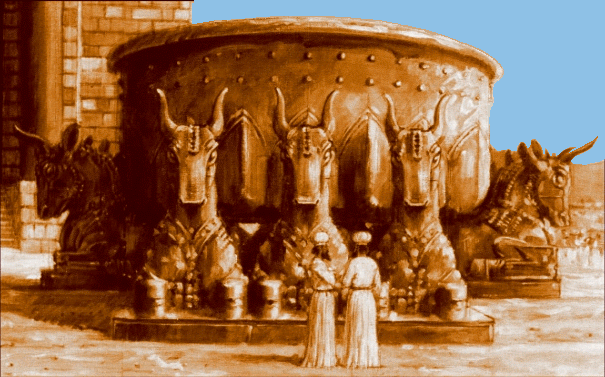
Next, Hiram crafted “the sea,” a large bronze basin that would sit outside the Temple’s entrance. This massive bowl was designed to replace the bronze laver that God had prescribed for the Tabernacle, while serving the same function as the original. According to Exodus 30, the first laver was used by the priests to purify themselves before offering sacrifices to God.

“You shall also make a basin of bronze, with its stand of bronze, for washing. You shall put it between the tent of meeting and the altar, and you shall put water in it, with which Aaron and his sons shall wash their hands and their feet. When they go into the tent of meeting, or when they come near the altar to minister, to burn a food offering to the Lord, they shall wash with water, so that they may not die. They shall wash their hands and their feet, so that they may not die. It shall be a statute forever to them, even to him and to his offspring throughout their generations.” – Exodus 30:18-21 ESV

The new basin was 15 feet in diameter, 47 feet in circumference, with a depth of 7.5 feet. It could hold up to 18,000 gallons of water, and its large size appears to have been designed to allow priests to completely immerse themselves, rather than just washing their hands and feet. It rested on the backs of 12 bronze oxen, arranged in groups of three, with each group facing a different direction on the compass. These bronze bulls may have been intended to represent the 12 tribes of Israel. But regardless, they were clearly symbols of strength.

Hiram then crafted ten mobile carts, each equipped with a large bronze basin. They featured wheels that allowed them to be moved about the Temple courtyard.

He also made ten basins in which to wash, and set five on the south side, and five on the north side. In these they were to rinse off what was used for the burnt offering, and the sea was for the priests to wash in. – 2 Chronicles 4:6 ESV

Each cart was six feet square and five and one-half feet high, and it held a bronze basin that could hold up to 240 gallons of water. As the Chronicles passage indicates, they were strategically located around the Temple courtyard and used by the priests to cleanse the blood from the sacrificial animals before they were offered to God.

You can almost sense that Solomon was attempting to improve on every item used in the original Tabernacle. He was making significant upgrades. Every item Hiram created was bigger and better than the original. Solomon was obsessed with making the house of God a grand and glorious structure, with every detail reflecting the majesty of its divine occupant. He could have saved himself a lot of time and money by reusing the original items, but Solomon would not settle for anything less than the best. So, he poured countless hours and resources into creating a Temple worthy of his great God, down to the last detail.

Solomon was following the instructions Yahweh gave to Moses from Mount Sinai when He ordered the creation of the original Tabernacle.

“Have the people of Israel build me a holy sanctuary so I can live among them. You must build this Tabernacle and its furnishings exactly according to the pattern I will show you.” – Exodus 25:8-9 NLT

Moses received detailed plans for the construction of the LORD’s house, with nothing left to the imagination. God was explicit in describing every facet of the Tabernacle’s design, and ordered Moses, “Be sure that you make everything according to the pattern I have shown you here on the mountain” (Exodus 25:40 NLT). Evidently, Moses received a vision of what the completed Tabernacle should look like, and he was to ensure that the finished product was an accurate facsimile. He was not to cut corners, leave out any detail, or make alterations to its design. No expense was to be spared, no shortcuts taken, and no cost-cutting measures considered because this was to be the house of Yahweh. The God of the universe deserved nothing but the best. If the people of Israel expected Him to dwell among them, they would need to build a house worthy of housing His presence. 

“I will meet the people of Israel there, in the place made holy by my glorious presence. Yes, I will consecrate the Tabernacle and the altar, and I will consecrate Aaron and his sons to serve me as priests. Then I will live among the people of Israel and be their God, and they will know that I am the LORD their God. I am the one who brought them out of the land of Egypt so that I could live among them. I am the LORD their God. – Exodus 29:43-46 NLT

Solomon shared Moses’ commitment to build a house that Yahweh would deem worthy of bearing His name and containing His glory. So, he went out of his way to ensure that this house met Yahweh’s exacting standards, because he longed for the assurance of Yahweh’s presence and power.

English Standard Version (ESV) The Holy Bible, English Standard Version. ESV® Permanent Text Edition® (2016). Copyright © 2001 by Crossway Bibles, a publishing ministry of Good News Publishers.

New Living Translation (NLT) Holy Bible, New Living Translation, copyright © 1996, 2004, 2015 by Tyndale House Foundation. Used by permission of Tyndale House Publishers Inc., Carol Stream, Illinois 60188. All rights reserved.

Making God Known

To the choirmaster: with stringed instruments. A Psalm. A Song.

1 May God be gracious to us and bless us
    and make his face to shine upon us, Selah
that your way may be known on earth,
    your saving power among all nations.
Let the peoples praise you, O God;
    let all the peoples praise you!

Let the nations be glad and sing for joy,
    for you judge the peoples with equity
    and guide the nations upon earth. Selah
Let the peoples praise you, O God;
    let all the peoples praise you!

The earth has yielded its increase;
    God, our God, shall bless us.
God shall bless us;
    let all the ends of the earth fear him! Psalm 67:1-7 ESV

In this relatively short but powerful psalm, the unidentified author issues a corporate petition of prayer and praise, calling on all nations to recognize the goodness and greatness of Yahweh. It begins with a reminder for the Israelites to live out their calling as God’s chosen people.

May God be merciful and bless us.
    May his face smile with favor on us. Interlude

May your ways be known throughout the earth,
    your saving power among people everywhere – Psalm 67:1-2 NLT

He issues this calling by echoing the promise God made to Abraham when He called him out of Ur centuries earlier.

“I will make you into a great nation. I will bless you and make you famous, and you will be a blessing to others. I will bless those who bless you and curse those who treat you with contempt. All the families on earth will be blessed through you.” – Genesis 12:1-2 NLT

The psalmist asks God to fulfill that promise in the lives of His covenant people, but he has an ulterior motive. He also reminds his audience that they are the vehicle through which God will work to bless all the families of the earth. God had always intended to bless the descendants of Abraham so that they might be a blessing to others. From the moment God called Abraham out of Ur and sent him to Canaan, He had planned to bless this elderly pagan and his equally old and barren wife with a host of descendants. The lineage of Abraham and Sarah would eventually increase in number and fill the land of Canaan, where God would continue to pour out His undeserved blessings upon them. He would give them land by orchestrating their victories over their enemies. He would provide for and protect them.

The Israelites’ relationship with Yahweh would set them apart from all other nations on earth, a fact that Moses recognized long before they reached the land of Canaan.

For what great nation has a god as near to them as the Lord our God is near to us whenever we call on him? And what great nation has decrees and regulations as righteous and fair as this body of instructions that I am giving you today? – Deuteronomy 4:7-8 NLT

The psalmist understood that God had set apart the people of Israel as His “treasured possession.”

“For you are a people holy to the Lord your God. The Lord your God has chosen you to be a people for his treasured possession, out of all the peoples who are on the face of the earth.” – Deuteronomy 7:6 ESV

As God’s holy people, they were expected to reflect His values by obeying His commands. They were to mirror HIs character by adhering to the Ten Commandments, His code of conduct that would set them apart from all the other nations on earth. When they obeyed, they would be a blessing to the nations by illustrating what a right relationship with God looked like in everyday life. The psalmist believed that the Israelites would bless the nations when they walked in keeping with God’s ways. Their obedience to the one true God would serve as a powerful example to the nations that there were no other gods. Yahweh alone rules and reigns over the nations. That is why the psalmist optimistically foreshadows a day when the world will recognize the goodness and greatness of Israel’s God.

Let the whole world sing for joy,
    because you govern the nations with justice
    and guide the people of the whole world. Interlude

May the nations praise you, O God.
    Yes, may all the nations praise you. – Psalm 67:4-5 NLT

He ends his psalm by proclaiming his firm belief that Yahweh will continue to bless the Israelites so that they might be a blessing to the world.

God, our God, will richly bless us.
Yes, God will bless us,
    and people all over the world will fear him. – Psalm 67:7 NLT

This ought to be the daily prayer of every child of God. We should each harbor a deep desire for God to reveal Himself and make Himself known to every person who walks the face of the earth. The Scriptures clearly teach that God is revealed through His creation.

For ever since the world was created, people have seen the earth and sky. Through everything God made, they can clearly see his invisible qualities — his eternal power and divine nature. So they have no excuse for not knowing God. – Romans 1:20 NLT

God’s power and character are revealed in His creation, but those same qualities should be clearly manifested in the lives of human beings — the pinnacle of His creation. After all, we are made in His image, and those of us who have been redeemed by the death of His Son and given the indwelling presence of His Spirit should be daily illustrations of His power and character. Others should be able to see Him at work in and around us.

The psalmist prays, “May your ways be known throughout the earth, your saving power among people everywhere.” Interestingly, he uses the word “ways,” which in Hebrew can refer to a journey, path, or course of life. It can also refer to the habits or manner in which one performs their duties. It seems that the psalmist is referring to the way God relates to His people through His saving power. That is what the psalmist wants the world to see. The NET Bible notes the psalmist “refers here to God’s characteristic behavior, more specifically, to the way he typically saves his people.”

He wants the world to see God’s mercy, grace, forgiveness, kindness, and saving power as He rescues His people. Of course, behind this request is a desire to be saved by God. The psalmist wants to see God work in his own life and in the lives of the people of God. He realizes that when the nations see the kind of God people of Israel serve, they will end up praising Him, too. They will be able to see that He rules with justice, is powerful, and uses that power to care for those who worship Him.

We should desire for God to make Himself known through us. But that means we should be ready and willing to find ourselves in situations where we HAVE TO rely on God for salvation. We must be willing to suffer circumstances in which God can reveal His saving power in our lives. Had the Israelites not found themselves at the Red Sea with the army of Egypt bearing down on them, they would never have witnessed the saving power of God. Their difficulty proved to be an opportunity to witness the “ways” of God. Had David not found himself running from King Saul, he would never have known the “ways” of God.

The truth is, the unwanted ways in which our lives sometimes go are precisely where God wants us so that He can reveal His “ways” through us and to us. God is making Himself known throughout the world and has chosen to do it through us, His people. We are the way He has chosen to reveal His power, mercy, grace, and saving power to a lost and dying world.

Father, make Yourself known through me today. Use the circumstances of my life to reveal Your ways to the world around me. May Your saving power be evident to everyone who sees me today. Amen

English Standard Version (ESV) The Holy Bible, English Standard Version. ESV® Permanent Text Edition® (2016). Copyright © 2001 by Crossway Bibles, a publishing ministry of Good News Publishers.

New Living Translation (NLT) Holy Bible, New Living Translation, copyright © 1996, 2004, 2015 by Tyndale House Foundation. Used by permission of Tyndale House Publishers Inc., Carol Stream, Illinois 60188. All rights reserved.

God’s Presence and Protection Require Faithfulness

A Song. A Psalm of the Sons of Korah.

1 Great is the LORD and greatly to be praised
    in the city of our God!
His holy mountain, beautiful in elevation,
    is the joy of all the earth,
Mount Zion, in the far north,
    the city of the great King.
Within her citadels God
    has made himself known as a fortress.

For behold, the kings assembled;
    they came on together.
As soon as they saw it, they were astounded;
    they were in panic; they took to flight.
Trembling took hold of them there,
    anguish as of a woman in labor.
By the east wind you shattered
    the ships of Tarshish.
As we have heard, so have we seen
    in the city of the LORD of hosts,
in the city of our God,
    which God will establish forever. Selah

We have thought on your steadfast love, O God,
    in the midst of your temple.
10 As your name, O God,
    so your praise reaches to the ends of the earth.
Your right hand is filled with righteousness.
11     Let Mount Zion be glad!
Let the daughters of Judah rejoice
    because of your judgments!

12 Walk about Zion, go around her,
    number her towers,
13 consider well her ramparts,
    go through her citadels,
that you may tell the next generation
14     that this is God,
our God forever and ever.
    He will guide us forever. Psalm 48:1-14 ESV

This psalm, like the previous one, was written by one of the sons of Korah and was designed to accentuate the supremacy and superiority of Yahweh over every other ĕlōhîm. The title ĕlōhîm, which is commonly rendered as “god” in our English translations, was the generic title for all deities. Yet, it was also used to refer to the one true God, the Creator of the universe.

In the beginning, God [ĕlōhîm] created the heavens and the earth. The earth was without form and void, and darkness was over the face of the deep. And the Spirit of God [ĕlōhîm] was hovering over the face of the waters. – Genesis 1:1-2 ESV

To differentiate Himself from all the false gods that mankind manufactured after the fall, the Creator God introduced Himself to Moses with a new name.

Say this to the people of Israel: I am has sent me to you.” God [ĕlōhîm] also said to Moses, “Say this to the people of Israel: Yahweh, the God of your ancestors—the God [ĕlōhîm] of Abraham, the God [ĕlōhîm] of Isaac, and the God [ĕlōhîm] of Jacob—has sent me to you. – Exodus 3:14-15 NLT

This more intimate and personal name would become the primary way the people of Israel addressed their God. He even told them, “This is my eternal name, my name to remember for all generations” (Psalm 48:15 NLT).

The psalmist opens his song with a statement of praise for this eternal and highly personal name of God.

How great is the LORD [Yahweh],
    how deserving of praise… – Psalm 48:1 NLT

In a sense, the psalmist is highlighting the unparalleled nature of Israel’s ĕlōhîm. Other nations could claim to worship a superior ĕlōhîm, but their god was no match for Yahweh. In ancient times, gods were believed to be regionally based deities who ruled from and over specific locales. That is why the psalmist mentions Jerusalem, “the city of our God!” (Psalm 48:2 ESV). Then, he specifies the exact spot on which the royal city sits.

His holy mountain, beautiful in elevation,
    is the joy of all the earth,
Mount Zion, in the far north,
    the city of the great King.
Within her citadels God
    has made himself known as a fortress. – Psalm 48:1-3 ESV

From the psalmist’s perspective, Yahweh dwelt in Jerusalam, which sat on the Mount of Zion. He describes this sacred spot as Yahweh’s citadel or palace, from which He rules as the great King. His presence among the Israelites created a fortress-like environment, protecting them from their enemies and assuring them of safety and security from harm.

God himself is in Jerusalem’s towers,
    revealing himself as its defender. – Psalm 48:3 NLT

In a somewhat arrogant fashion, the psalmist brags of Jerusalem’s invincibility, declaring that Yahweh’s presence serves as a kind of “iron dome,” protecting its inhabitants from all threats.

The kings of the earth joined forces
    and advanced against the city.
But when they saw it, they were stunned;
    they were terrified and ran away.
They were gripped with terror
    and writhed in pain like a woman in labor.
You destroyed them like the mighty ships of Tarshish
    shattered by a powerful east wind. – Psalm 48:4-7 NLT

With Yahweh serving as their protector and defender, they could sleep peacefully at night, knowing they had nothing to fear. No harm could come their way as long as Yahweh was with them.

Verse 2 contains a subtle yet significant statement intended to set Yahweh apart from the competition. In describing Mount Zion, the psalmist states, “It is lofty and pleasing to look at,  a source of joy to the whole earth. Mount Zion resembles the peaks of Zaphon” (Psalm 48:2 NET). He is purposefully differentiating Mount Zion from Mount Zaphon, a range located to the north of Jerusalem. This reference to Mount Zaphon is important because local legends designated this location as the gathering place of the gods.

The prophet Isaiah recorded a divine warning against the king of Babylon, predicting his eventual fall.

“How you are fallen from heaven,
    O shining star, son of the morning!
You have been thrown down to the earth,
    you who destroyed the nations of the world.
For you said to yourself,
    ‘I will ascend to heaven and set my throne above God’s stars.
I will preside on the mountain of the gods
    far away in the north [ṣāp̄ôn].
I will climb to the highest heavens
    and be like the Most High…” – Isaiah 14:12-14 NLT

In this prophetic judgment, the king is described as seeking to set up his throne on “the mountain of the gods,” which was located in the north. The Hebrew word translated as “north” is ṣāp̄ôn or Zaphon.

“Mt. Zaphon to the north of Palestine was the mythical residence of the gods (as Mt. Olympus was the mythical residence of the gods to the Greeks; v. 13; cf. Ps. 48:2). Rather than being king of the gods, Babylon’s king proved to be only human having weakened nations through his domination of them. Even though he had exalted himself to near deity status, he would die and go to Sheol like every other proud person.” – Thomas L. Constable, Study Notes on Isaiah

“Zaphon, located north of Israel, was the sacred mountain of the Canaanites from which their high god El supposedly ruled. However, Zion was the real ‘Zaphon,’ for it was here that the Lord God of Israel, the ‘Great King’ of the universe, lived and ruled.” – Robert B. Chisholm, Jr., “A Theology of the Psalms.” In A Biblical Theology of the Old Testament

Zaphon was not a sacred mountain because the Canaanite god, El, was not a real god. He was the figment of the fertile imaginations of a pagan people who attempted to replace the one true ĕlōhîm with a god of their own making. The apostle Paul describes mankind’s sin-inspired penchant for replacing the one true God with a poor substitute.

Yes, they knew God, but they wouldn’t worship him as God or even give him thanks. And they began to think up foolish ideas of what God was like. As a result, their minds became dark and confused. Claiming to be wise, they instead became utter fools. And instead of worshiping the glorious, ever-living God, they worshiped idols made to look like mere people and birds and animals and reptiles. – Romans 1:21-23 NLT

But for the psalmist, no other ĕlōhîm would do.

O God [ĕlōhîm], we meditate on your unfailing love
    as we worship in your Temple.
As your name deserves, O God [ĕlōhîm],
    you will be praised to the ends of the earth.
    Your strong right hand is filled with victory.
Let the people on Mount Zion rejoice.
    Let all the towns of Judah be glad
    because of your justice. – Psalm 48:9-11 NLT

There was no competition between Zion and Zaphon because there was no ĕlōhîm living in the north. Yahweh had no rivals, and the people of Israel had nothing to worry about when it came to their enemies and their enemies’ false, non-existent gods. All they had to do was look at the majesty and magnificence of Jerusalem and be reminded that their ĕlōhîm was superior.

Go, inspect the city of Jerusalem.
    Walk around and count the many towers.
Take note of the fortified walls,
    and tour all the citadels,
that you may describe them
    to future generations.
For that is what God is like.
    He is our God forever and ever,
    and he will guide us until we die. – Psalm 48:12-14 NLT

The city was impregnable, a fitting reminder of God’s power and protective capacity. The fortifications of Jerusalem were to serve as a symbol of Yahweh’s presence, power, and provision for generations to come. He would not leave them or forsake them. But in his enthusiasm, the psalmist leaves out one small but highly significant point. God expected His people to remain faithful. His presence was predicated on their obedience to His law and faithfulness to the covenant they had made with Him. They would enjoy His protection as long as they remained spiritually faithful and refrained from worshiping other ĕlōhîm. But centuries later, the prophet Isaiah would repeatedly warn of God’s pending wrath for their infidelity and unfaithfulness.

“Pray no more for these people, Jeremiah. Do not weep or pray for them, and don’t beg me to help them, for I will not listen to you. Don’t you see what they are doing throughout the towns of Judah and in the streets of Jerusalem? No wonder I am so angry! Watch how the children gather wood and the fathers build sacrificial fires. See how the women knead dough and make cakes to offer to the Queen of Heaven. And they pour out liquid offerings to their other idol gods! Am I the one they are hurting?” asks the Lord. “Most of all, they hurt themselves, to their own shame.”

So this is what the Sovereign Lord says: “I will pour out my terrible fury on this place. Its people, animals, trees, and crops will be consumed by the unquenchable fire of my anger.” – Jeremiah 7:16-20 NLT

God’s presence and protection are vital to His people’s survival, but they do not come without a cost. God requires that His people commit wholeheartedly to Him. He is a jealous God who will not tolerate infidelity and unfaithfulness. He will not tolerate spiritual adultery among His chosen people. If the psalmist wanted to continue to enjoy the presence, power, and protection of Yahweh, he would need to call the people of Israel to live up to their covenant commitments.

Father, I revel in the reality of Your presence in my life and I fully appreciate the promise of the care and protection You provide. But I sometimes live as though my actions don’t matter. I treat Your love with a flippancy and carelessness that borders on rebellion. I fail to treat You with the honor and reverence You deserve, living my life according to my own will and agenda. I know You are the one true God and I am confident in Your power and fully appreciate Your divine protection over my life. But forgive me for the many times I take Your protection for granted. Help me to live faithfully and obediently, treating You with all the honor You deserve. Amen

English Standard Version (ESV) The Holy Bible, English Standard Version. ESV® Permanent Text Edition® (2016). Copyright © 2001 by Crossway Bibles, a publishing ministry of Good News Publishers.

New Living Translation (NLT) Holy Bible, New Living Translation, copyright © 1996, 2004, 2015 by Tyndale House Foundation. Used by permission of Tyndale House Publishers Inc., Carol Stream, Illinois 60188. All rights reserved.

A Much-Needed Wake-up Call

1 Paul, an apostle of Christ Jesus by the will of God, and Timothy our brother, To the saints and faithful brothers in Christ at Colossae: Grace to you and peace from God our Father. – Colossians 1:1-2 ESV

The ancient city of Colossae achieved its early prominence and prosperity due to its location along a major trade route that ran through the Lycus River Valley in the Roman province of Asia Minor (in today’s modern-day Turkey). But in time, the nearby and newer city of Laodicea replaced Colossae as the economic engine of the region. The once-thriving metropolis of Colossae had become famous for manufacturing a much-coveted crimson-colored wool cloth known as colossinum. But by the time Paul wrote his letter, Colossae had become little more than a small village. It was in this environment that a small congregation of believers had sprung up.

The founding of the Colossian church is unclear. When Paul wrote his letter, he had not been to the city of Colossae, but his missionary journeys had taken him to nearby Ephesus where he spent an extended time spreading the gospel message and making converts. According to Acts 19:10, “This continued for two years, so that all the residents of Asia heard the word of the Lord, both Jews and Greeks.” It could be that one of the new converts from Ephesus took the good news of Jesus Christ to Colossae or a resident from Colossae had traveled to Ephesus and heard the preaching of Paul. Whatever the case, the gospel made its way to the Colossians, and in time, a small congregation had formed.

Because of its location along a major trade route, the city of Colossae had a population comprised of Greek colonists and native Phrygians. There would have also been a large number of Jews living in the area because Antiochus the Great (223-187 B.C.) had relocated hundreds of Jewish families from Mesopotamia to this region. So, this local congregation likely comprised people from every ethnic, cultural, and religious background. This diversity of backgrounds, coupled with the influence of false teachers, had produced confusion among the church’s young congregation.

It appears that Paul received word of the situation in Colossae from Epaphras, a resident of the city. Whether Epaphras visited Paul while he was under house arrest in Rome is unclear, but the fellow minister of the gospel had somehow gotten word to the apostle about the state of affairs in his hometown. According to verses 7-8 of chapter one, Epaphras had been instrumental in spreading the gospel to his fellow Colossians.

You learned the gospel from Epaphras, our dear fellow slave—a faithful minister of Christ on our behalf—who also told us of your love in the Spirit. – Colossians 1:7-8 NLT

However, Epaphras shared with Paul his concern for the spiritual well-being of the church. Without proper leadership and instruction, the fledgling congregation struggled to resist the temptation to syncretize their old religious ideologies with their new faith in Christ. Some of the Jewish converts to Christianity were attempting to “Judaize” the Gentile members of the congregation by demanding adherence to the rituals, traditions, and laws of Judaism. To make matters worse, some had infiltrated the church posing as doctrinal experts and propagating a dangerous brand of false teaching that stood in direct opposition to the teachings of Jesus, Paul, and the other apostles. This led Paul to open his letter with a statement establishing his apostolic credentials.

Paul, an apostle of Christ Jesus by the will of God… – Colossians 1:1 ESV

While Paul had not been one of the original 12 disciples of Jesus Christ, he had received his apostolic commission directly from the Lord Himself. In his earlier life, Paul had been a member of the Pharisees, a powerful and highly influential sect of Judaism. At one point, he described himself as the poster boy for religious extremism and dedication.

I was circumcised when I was eight days old. I am a pure-blooded citizen of Israel and a member of the tribe of Benjamin—a real Hebrew if there ever was one! I was a member of the Pharisees, who demand the strictest obedience to the Jewish law. I was so zealous that I harshly persecuted the church. And as for righteousness, I obeyed the law without fault. – Philippians 3:5-6 NLT

He was an up-and-coming member of the Pharisees who had been given a commission by the high priest to persecute and arrest members of “the way,” the name given to the cult of followers who worshiped the dead Rabbi, Jesus. Saul, as he was known then, was a devout Pharisee and a zealous adherent to and defender of the Jewish faith. He was determined to eradicate the memory of Jesus and eliminate every one of His followers. He would later describe to the Jews how he had been given a commission to hunt down and destroy Christians.

“I am a Jew, born in Tarsus, a city in Cilicia, and I was brought up and educated here in Jerusalem under Gamaliel. As his student, I was carefully trained in our Jewish laws and customs. I became very zealous to honor God in everything I did, just like all of you today. And I persecuted the followers of the Way, hounding some to death, arresting both men and women and throwing them in prison. The high priest and the whole council of elders can testify that this is so. For I received letters from them to our Jewish brothers in Damascus, authorizing me to bring the followers of the Way from there to Jerusalem, in chains, to be punished.” – Acts 22:3-5 NLT

But something remarkable occurred as Paul made his way to Damascus. He came face to face with the resurrected Jesus. A blinding light stopped him in his tracks, and a voice spoke to him, saying, “I am Jesus the Nazarene, the one you are persecuting” (Acts 22:8 NLT). Struck blind by the intense light, Paul could not see, but he clearly heard Jesus’ instructions to visit a man named Ananias. The stunned Pharisee obeyed Jesus command and sought out Ananias, who opened his eyes and revealed his new mission:

“The God of our ancestors has chosen you to know his will and to see the Righteous One and hear him speak. For you are to be his witness, telling everyone what you have seen and heard. What are you waiting for? Get up and be baptized. Have your sins washed away by calling on the name of the Lord.” – Acts 22:14-16 NLT

This “Damascus Road experience” transformed Paul’s life. He went from being a persecutor of “the Way” to being a proclaimer of the good news of Jesus Christ, the One who had proclaimed Himself to be “the way, the truth, and the life” (John 14:6 NLT). Paul was appointed an official apostle or messenger of Jesus Christ, with specific instructions to take the good news of salvation to the Gentiles. In the opening line of his letter, Paul stresses that he has divine authority to address the situation taking place within their local congregation. Because Paul was not one of the original 12 disciples, some attacked his apostolic credentials and he was forced to defend his rights to speak on behalf of Christ. He pushed back on these critics, declaring his God-given authority to serve as a spokesman for the resurrected Messiah.

I was not appointed by any group of people or any human authority, but by Jesus Christ himself and by God the Father, who raised Jesus from the dead. – Galatians 1:1 NLT

Many of the churches Paul helped to establish were being targeted by men who claimed to be speaking on behalf of God but were teaching false doctrines and leading the people away from the simplicity and integrity of the gospel. Many of these men were eloquent and influential speakers who derided Paul’s ministry and portrayed him as a charlatan. But Paul refused to let these individuals destroy what God had built.

But I will continue doing what I have always done. This will undercut those who are looking for an opportunity to boast that their work is just like ours. These people are false apostles. They are deceitful workers who disguise themselves as apostles of Christ. – 2 Corinthians 11:12-13 NLT

As Paul wrote the believers in Colossae, he opened his letter with a declaration of his apostleship. He wanted them to know that what he was about to tell them was divinely inspired and not just the thoughts of a man they had never met. He was about to divulge to them the will of God concerning their situation, and it would pay for them to listen. Paul also informed them that he was not alone in his concern for them. Timothy, his protégé and fellow minister of the gospel, stood with him in his message of encouragement and admonition.

Paul refers to his audience as “saints,” using a Greek term (hagios), which means “those set apart to God.” He wanted to remind them that they had been consecrated by God for His use. They belonged to Him and were obligated to live their lives in keeping with His will and according to His Word. They were not free to establish their own model for righteous living or to create their own system of religious rituals or creeds. They had been set apart by God and were to dedicate their lives to God. The rest of his letter addresses the specifics of their situation and the measures they must take to ensure that they continue to live faithful lives marked by God’s grace and peace.

These faithful “saints” lived in adverse conditions and faced constant threats to their spiritual growth and development. But Paul will challenge them “to walk in a manner worthy of the Lord, fully pleasing to him” (Colossians 1:10 ESV). His letter will serve as a much-needed wake-up call reminding them of their identity in Christ and the need to “continue in the faith, stable and steadfast, not shifting from the hope of the gospel” (Colossians 1:23 ESV). Paul, the faithful servant of Jesus Christ, will call the faithful saints in Colossae to “think about the things of heaven, not the things of earth” (Colossians 3:2 NLT) and to “live wisely among those who are not believers, and make the most of every opportunity” (Colossians 4:4 NLT). His message will be equal parts admonition and motivation. He will refute the false teachers, expose blind spots, and encourage godly behavior, all out of passion for the gospel and his love for the flock of Jesus Christ.

English Standard Version (ESV) The Holy Bible, English Standard Version. ESV® Permanent Text Edition® (2016). Copyright © 2001 by Crossway Bibles, a publishing ministry of Good News Publishers.

New Living Translation (NLT) Holy Bible, New Living Translation, copyright © 1996, 2004, 2015 by Tyndale House Foundation. Used by permission of Tyndale House Publishers Inc., Carol Stream, Illinois 60188. All rights reserved.

New English Translation (NET)NET Bible® copyright ©1996-2017 by Biblical Studies Press, L.L.C. http://netbible.com All rights reserved.